
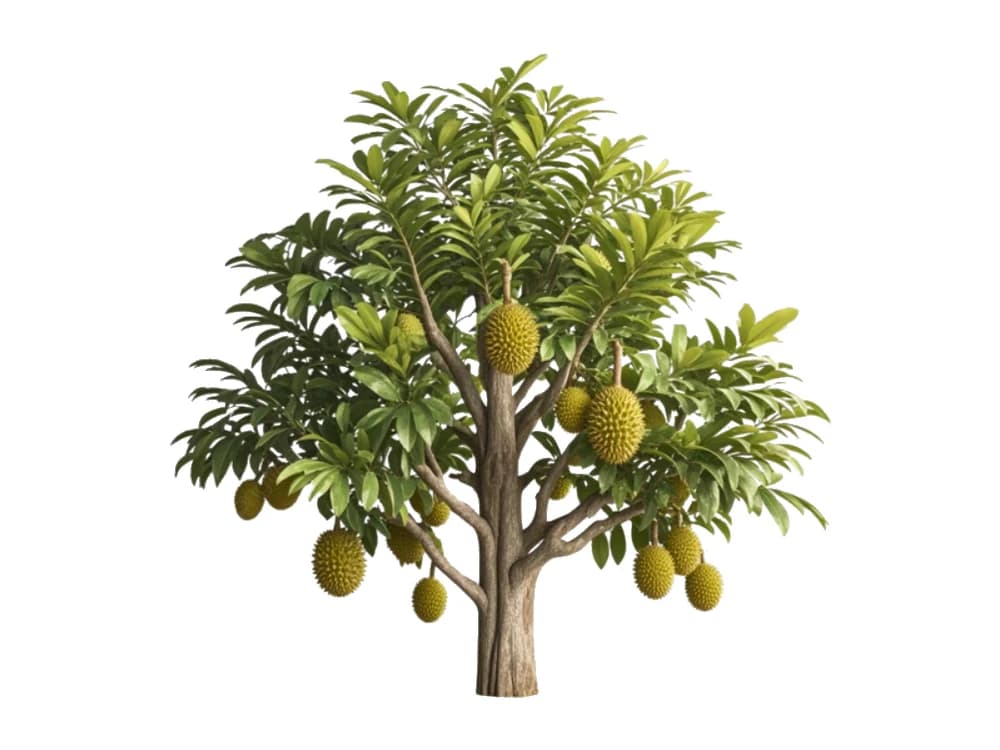
A fruiting season takes almost all of the reserves held in trunk and branch. The fine roots — the thin white layer that takes up water and nutrients — are sacrificed first, because the tree pushes everything toward the fruit. That is why orchards often see a tree stay green after harvest yet flower poorly: the canopy still has leaves while the uptake system below has failed.
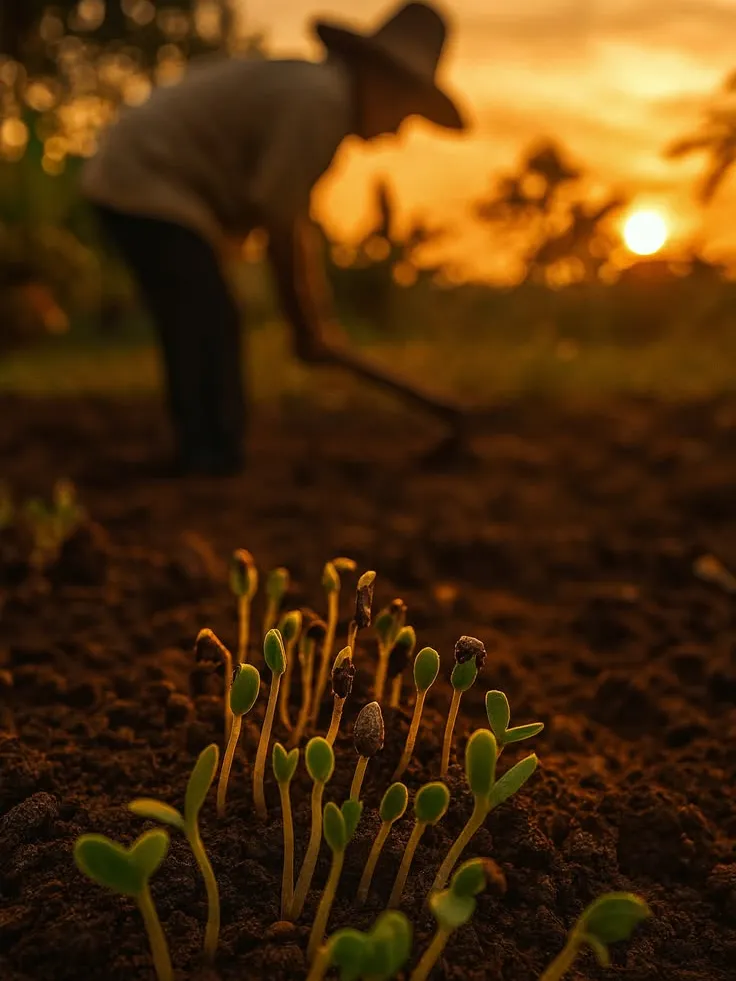
The first job is not to feed but to look. Dig a small hole 50–80 cm out from the trunk, about 20 cm deep, under the canopy drip line. Dense white fine roots mean the system is intact; brown brittle roots, or soil that lifts in solid clods, mean the bed must be repaired before anyone talks about rates.
In those first 30 days organics come before anything inorganic. Pelletised organics at 65–78% organic matter carry a C/N ratio near 12, so they break down steadily, feeding the tree while returning the humus the soil has lost. A working rate for durian is 3–5 kg per tree, banded in a ring at the drip line and covered with a thin layer of soil — never heaped at the trunk.
Only once new fine roots appear — usually after 25–40 days depending on moisture — should phosphorus and potassium follow for bud differentiation. Heavy nitrogen straight after harvest is the fastest way to get a flush of leaves instead of flowers.